


Hospitals and offices choose vinyl flooring because it is seamless, hygienic, slip-resistant and quiet underfoot, at a lower lifetime cost than tiles or stone. This guide covers the types of commercial vinyl, which one suits each area, what it costs, and what to check before you install.
Why vinyl instead of tiles?
- No grout lines. Sheet vinyl is heat-welded into one continuous surface, so there are no joints where dirt and bacteria collect. Grouted tiles crack under trolley wheels and trap germs.
- Easy to clean and disinfect. It is a smooth, non-porous surface that stands up to daily mopping.
- Slip resistance. Anti-slip grades are available for wet areas, entrances and ramps.
- Comfort and quiet. It is softer underfoot than stone and cuts the clatter of footsteps and trolleys, which matters in wards and open offices.
- Durable under heavy traffic, and quick to repair: a damaged section can be cut out and replaced.
- Fast installation with less downtime, which is important for running hospitals and offices.
Types of commercial vinyl flooring
| Type | What it is | Best for |
|---|---|---|
| Homogeneous vinyl sheet | Single layer with colour all the way through; heat-welded seams | Hospital wards, corridors, ICUs, labs |
| Heterogeneous vinyl sheet | Printed design layer under a clear wear layer | Offices, schools, retail |
| Anti-static (ESD) vinyl | Dissipates static electricity | Operation theatres, server rooms, electronics units |
| Anti-slip / safety vinyl | Textured surface for grip | Toilets, wet areas, ramps, kitchens |
| LVT and SPC planks | Wood or stone look in plank or tile format | Offices, hotel rooms, receptions |
Which vinyl for which area?
Hospitals and clinics
- Wards and patient rooms: homogeneous vinyl, for hygiene and easy cleaning.
- Corridors: heavy-duty homogeneous vinyl, to handle trolleys and footfall.
- ICU and OT: anti-static vinyl where specified, with coved skirting.
- Toilets and scrub areas: anti-slip vinyl, laid to falls toward the drain.
Offices and corporate spaces
- Workstations and cabins: heterogeneous vinyl or LVT planks, for a wood look that is quiet underfoot.
- Reception and lobby: LVT in wood or stone designs, for a premium first impression.
- Pantry and washrooms: anti-slip vinyl.
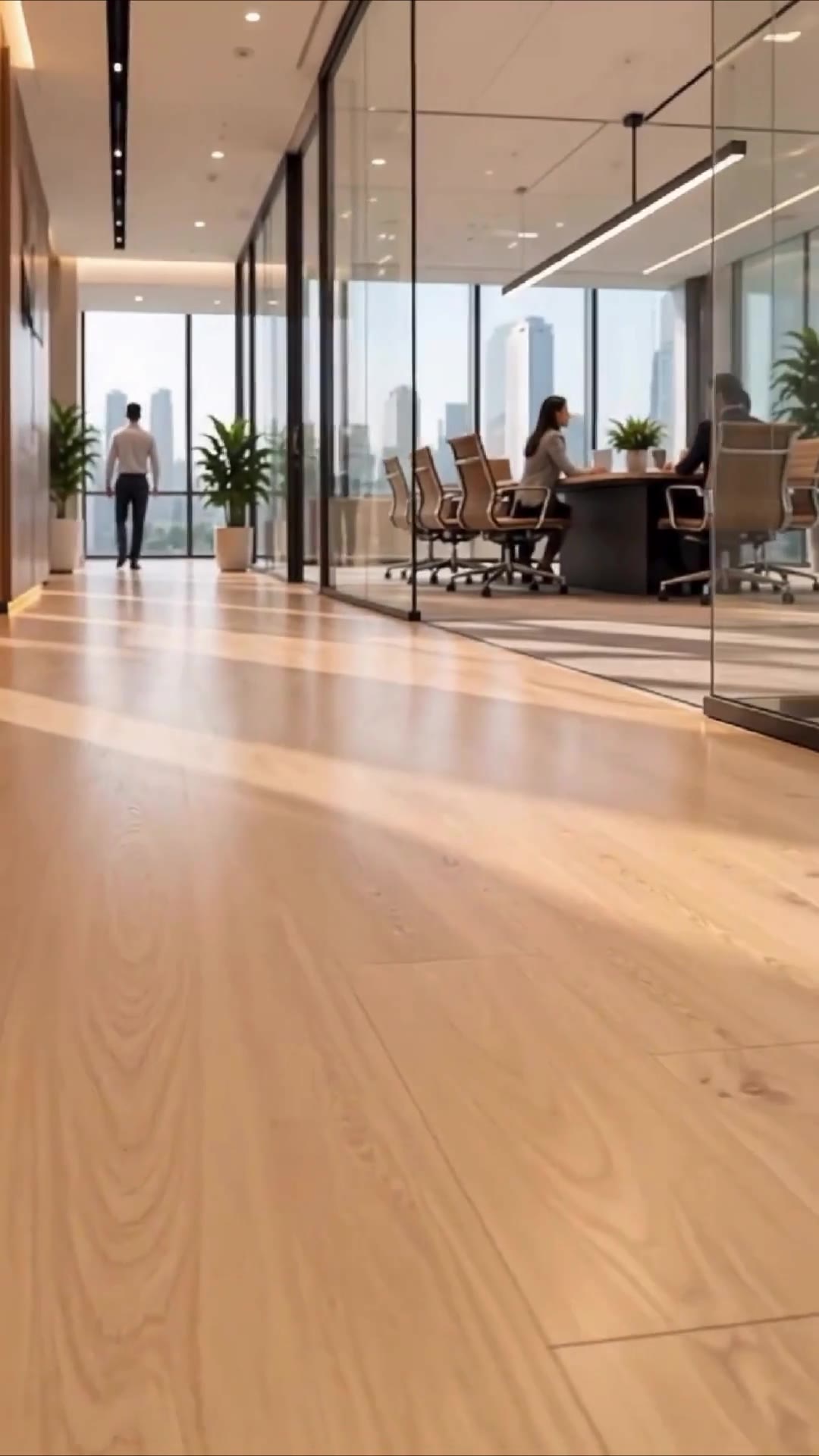
Also suitable for schools, hotels, gyms, warehouses and industrial units. Explore our carpet tiles and planks for office areas that need softer floors.
What is coved skirting, and why does it matter?
In hospitals, the vinyl is curved up the wall by about 100 mm instead of meeting it at a sharp corner. This coved skirting removes the gap between floor and wall where dust and bacteria build up, so the whole room can be cleaned in one sweep. It is a standard requirement in clinical areas.
How much does vinyl flooring cost?
As an indication, installed hospital-grade vinyl in India costs about ₹150–₹300 per sq ft for wards and corridors, and about ₹200–₹500 per sq ft for ICU and operation theatres with anti-static grades (2026 hospital flooring guide). Office vinyl and LVT vary with design and thickness.
The final cost depends on the vinyl grade and thickness, the condition of the subfloor (levelling may be needed), coved skirting and welding, and the total area. We give an exact quote after a free site survey.
5 things to check before installing
- Subfloor: it must be flat, dry and clean. Damp floors cause vinyl to lift.
- The right grade for each zone: don't use one product everywhere.
- Welded seams and coving in all clinical areas.
- Slip rating for wet zones and entrances.
- Experienced installers: welding and coving need skilled hands.
Frequently asked questions
What is the best flooring for a hospital in India? Homogeneous vinyl sheet with welded seams and coved skirting for wards and corridors, anti-static vinyl for operation theatres, and anti-slip vinyl for wet areas.
Why do hospitals use vinyl instead of tiles? Vinyl is seamless, so there are no grout lines to trap bacteria. It is easier to disinfect, quieter, and won't crack under trolleys.
Is vinyl flooring good for offices? Yes. It is durable, quiet, comfortable to walk on and available in wood or stone looks at a lower cost than real wood or marble.
Is vinyl flooring slippery? Standard vinyl is safe when dry. Choose anti-slip grades for washrooms, entrances and other wet areas.
How long does commercial vinyl flooring last? Good-quality commercial vinyl typically lasts 10–20 years with routine cleaning.
Request a free site survey
Seeya Enterprise supplies and installs commercial vinyl flooring for hospitals, offices, schools, hotels and industries across India. We survey the site, recommend the right grade for every zone, and handle installation end to end.
📞 +91 99240 08910 · Explore vinyl flooring · Glass films for offices